
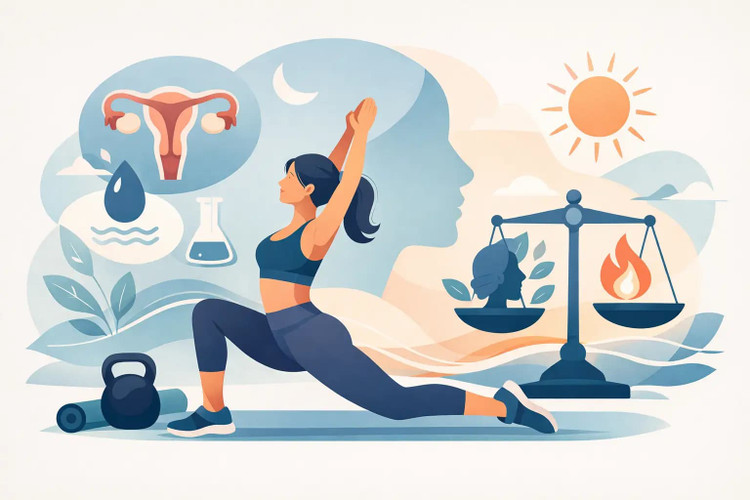
Best Exercise for Hormonal Imbalance: Strength, Walking & Restorative Movement
Apr 20th 2026
When your body already feels unpredictable, the wrong workout can make everything louder. More fatigue. More cravings. More irritability. That is why finding the right exercise for hormonal imbalance matters so much. Movement can support better blood sugar balance, stress regulation, sleep, circulation, and mood, but only when it matches what your body can actually handle.
If you have been told to just work out harder, push through, or burn more calories, you are not imagining how discouraging that can feel. For many women dealing with PCOS, perimenopause, cycle irregularities, burnout, fibroids, or unexplained symptoms, hormone support starts with a different question. Not how much can I force, but what kind of movement helps my body feel safer, steadier, and more supported.
If you are not fully sure what kind of imbalance you may be dealing with, start there. Some women spend years feeling dismissed or misdiagnosed. A symptom quiz can be a helpful first step in putting language to what you are experiencing and pointing you toward a more personalized path.
Why exercise for hormonal imbalance works differently
Exercise affects hormones, but not in a one-size-fits-all way. The same workout that helps one woman feel energized can leave another feeling depleted for two days. That does not mean exercise is bad for your hormones. It means your current stress load, sleep quality, cycle phase, metabolic health, and recovery capacity all matter.
In general, the most supportive exercise for hormonal imbalance helps regulate cortisol rather than constantly spiking it, improves insulin sensitivity without draining your nervous system, and supports muscle mass because muscle plays an important role in blood sugar balance and long-term hormone health. It can also improve circulation, support detox pathways through sweat and lymph movement, and help with mood swings that often come with hormonal changes.
The trade-off is that more is not always better. Intense training can be helpful for some women in the right season, but if you are already under-slept, underfed, highly stressed, or dealing with burnout symptoms, it may backfire. A supportive routine should challenge you without overwhelming you.
The best types of exercise for hormonal imbalance
For most women, the strongest foundation is a mix of strength training, walking, and restorative movement. This combination tends to support hormones without demanding extremes.
Strength training for blood sugar and hormone support
Strength training is one of the most helpful forms of exercise for hormonal imbalance, especially when insulin resistance, fatigue, weight changes, or PCOS symptoms are part of the picture. Building muscle improves how your body uses glucose, which can help reduce some of the blood sugar swings that contribute to hormone disruption.
This does not have to mean punishing gym sessions. Two to four sessions a week can be enough. Think basic, repeatable movements such as squats, rows, deadlifts, presses, and band work. Even bodyweight strength training counts if it is consistent and gradually progresses over time.
The key is dosage. If every session leaves you shaky, exhausted, or unable to recover, that is not a sign you are doing it right. It may be a sign your body needs less intensity, more fuel, or more rest between sessions.
Walking for cortisol, mood, and consistency
Walking is often underestimated because it looks simple. But simple is not the same as ineffective. Walking can help regulate stress hormones, support digestion, improve insulin sensitivity, and make it easier to stay consistent when your energy is low.
For women dealing with hormonal symptoms, walking is often the movement that feels doable on hard days. That matters. A plan you can return to is more supportive than a perfect routine you quit after a week. Ten minutes after meals, a longer morning walk, or a gentle walk in the evening can all be useful depending on your schedule and energy.
Restorative movement for a stressed nervous system
If your body feels stuck in fight-or-flight, restorative forms of movement deserve more attention. Gentle yoga, stretching, mobility work, Pilates, and breath-led movement can help calm the nervous system, improve body awareness, and reduce tension that builds when stress stays high for too long.
This kind of movement is especially helpful if you notice that intense exercise increases anxiety, disrupts sleep, or leaves you inflamed. It may not look dramatic, but it can be a meaningful part of hormone support. Sometimes the body needs regulation before it is ready for heavier training.
What to watch out for
Not every popular fitness trend is helpful when hormones are already strained. Daily high-intensity workouts, fasted cardio, and exercise routines built around punishment can push the body further into imbalance, especially if you are also skipping meals, sleeping poorly, or carrying a high mental load.
That does not mean high-intensity exercise is always off limits. Some women tolerate it well and enjoy it. Others do better using it sparingly, maybe once or twice a week, and only when recovery is solid. It depends on the person, the season, and the symptoms.
A few signs your current routine may be too much include worsening fatigue, sleep disruption, increased cravings, missing or irregular cycles, elevated anxiety, longer recovery time, and feeling wired but tired. If that sounds familiar, scaling back is not failure. It is information.
How to build a realistic weekly routine
The best routine is one you can sustain without feeling like your life revolves around it. A supportive week might include two or three strength sessions, daily walks or light movement, and one or two restorative sessions. That is enough to create momentum without turning hormone support into another source of pressure.
It also helps to adjust based on your body. During certain parts of your cycle, you may feel stronger and more energized. At other times, gentler movement may feel better. In perimenopause or high-stress seasons, recovery may need to take a bigger role. Flexibility is not inconsistency. It is wisdom.
This is where the NERS framework helps. Exercise works best when it is not isolated from nutrition, rest, and stress management. If you are trying to out-exercise poor sleep, high stress, or undernourishment, progress often stalls. Hormone health responds to patterns, not single heroic efforts.
If you are dealing with specific hormone concerns
Different symptom patterns can change what works best. Women with PCOS often benefit from strength training and walking because of their impact on insulin sensitivity and inflammation. Women in perimenopause may need more focus on muscle-building and recovery to support changing estrogen levels, bone health, and energy. Women with burnout-related hormone symptoms may need to begin with walking, mobility, and nervous system regulation before adding more demanding exercise.
If you have fibroids, very heavy bleeding, chronic pain, dizziness, or another diagnosed condition, your plan may need modifications. The goal is not to copy someone else’s routine. It is to find what supports your body now.
And if you are still trying to figure out what your symptoms mean, begin with more clarity, not more guessing. A quiz can help you identify patterns and point you toward the kind of support that makes sense for your symptoms instead of throwing random wellness advice at the problem.
Information is helpful, but action changes things
A lot of women already know they should move their bodies. What they need is a way to do it consistently, without extremes, confusion, or shame. That is where support matters.
Eco Your Way is built around that reality. The quiz can help you identify where to start, especially if you have felt misdiagnosed, overlooked, or unsure what category your symptoms even fit into. And the Skool community is not just a place to collect information. It is the action place, where women practice NERS together so change becomes part of daily life, not just another tab left open on your phone.
You do not need a punishing routine to support your hormones. You need movement that works with your body often enough to build trust again. Start simple, stay observant, and let consistency do the quiet work.