
Hormone Imbalance Quiz for Women
Apr 14th 2026
When your body feels off, the hardest part is often not the symptoms themselves, it’s the second-guessing. Maybe your periods changed, your energy crashed, your sleep got lighter, your cravings got louder, or your mood started swinging in ways you barely recognize. A hormone imbalance quiz for women can be a helpful starting point because it gives language to what you’re experiencing when everything feels scattered.
That matters more than it may seem. Many women spend months, sometimes years, trying to piece together symptoms that seem unrelated. Fatigue gets brushed off as stress. Irregular cycles get called normal. Brain fog gets blamed on being busy. Weight changes, acne, hair thinning, sleep disruption, low libido, anxiety, and heavy bleeding often get treated as separate problems when they may be connected.
It’s not in your head. And you do not have to stay stuck guessing.
What a hormone imbalance quiz for women can actually do
A good quiz is not a diagnosis, and it should never pretend to be one. What it can do is help you organize your symptom picture. That sounds simple, but it is often the first real step toward relief.
Most women are not dealing with one isolated complaint. They are dealing with patterns. Maybe your cycle is irregular and your energy is low. Maybe your sleep is broken and your irritability spikes before your period. Maybe you have signs that overlap with PCOS, perimenopause, burnout, thyroid disruption, estrogen dominance, or blood sugar imbalance. A quiz helps surface those patterns so you can stop chasing random fixes.
That is especially helpful if you have felt dismissed before, or if you have been told your labs are fine while your body clearly says otherwise. A symptom-based quiz can help you describe what is happening in a clearer, more structured way.
Why symptom patterns matter
Hormones do not work alone. Estrogen, progesterone, insulin, cortisol, thyroid hormones, and reproductive hormones all affect one another. That is why hormonal issues rarely show up in just one part of life.
For example, if stress is driving cortisol dysregulation, you may also notice poor sleep, cravings, cycle changes, and a harder time recovering from workouts. If insulin resistance is part of the picture, you might see fatigue after meals, stubborn weight gain, irregular periods, and increased cravings. If you are moving into perimenopause, symptoms may include shorter cycles, heavier bleeding, night waking, mood shifts, and feeling like your usual routines suddenly stopped working.
A quiz does not replace testing or medical care. But it can help you stop viewing your symptoms as random failures and start seeing them as signals.
When taking a hormone imbalance quiz makes sense
If you are searching for answers because your body feels unfamiliar, a quiz can be useful early on. It is especially helpful when symptoms are broad, changing, or easy to minimize.
You might consider starting there if you are dealing with irregular or painful periods, fatigue that does not improve with rest, acne or skin changes, bloating, hair shedding, difficulty losing weight, mood swings, poor sleep, intense PMS, fertility concerns, burnout, or a sense that your cycle has changed and you cannot explain why.
It is also a good starting point if you have been misdiagnosed in the past or if you have been handed fragmented advice that does not account for your whole experience. The point is not to label yourself too quickly. The point is to gather useful information and move forward with more clarity.
What to look for in a helpful quiz
Not all quizzes are created with care. Some are designed to be dramatic, overly simplistic, or fear-based. That can leave you feeling more overwhelmed than informed.
A useful hormone imbalance quiz for women should ask about real-life symptoms in plain language. It should consider more than one possible pattern. It should avoid promising certainty from a short set of questions. And ideally, it should lead you toward practical next steps, not just vague awareness.
That is where a structured resource can make a difference. If a quiz helps identify a likely pattern but gives you no support for what to do next, you are still left holding the weight alone. This is where our hormonal quiz stands out.
Start with the quiz, then follow the pattern
If you have been trying to figure out whether your symptoms line up with PCOS, perimenopause, burnout-related hormone disruption, fibroids, or another imbalance pattern, the quiz can be a strong first move. It helps you describe your symptoms and identify a direction without needing to sort through every possibility by yourself.
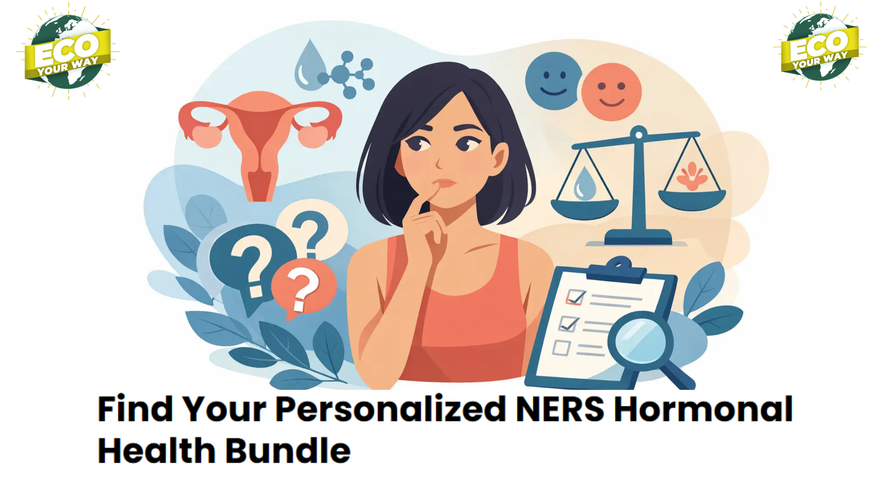
After completing the quiz, you receive a bundle recommendation based on your answers. That matters because once you have a likely pattern, support becomes more practical. Instead of collecting disconnected tips from social media, you can begin with tools designed around what your body may actually need.
For women who feel overwhelmed, that kind of structure can be a relief. You are not expected to know everything before you begin. You just need a starting point that makes sense.
Why the next step matters more than the quiz itself
Awareness helps, but action creates change. This is where many women get stuck. They identify with a symptom pattern, feel a burst of hope, and then end up right back in confusion because they do not know what to do consistently.
That is why support needs to be realistic. Hormone health is not built through extreme resets, punishing routines, or trying ten supplements at once. It is built through steady practices that support the body across daily life.
The NERS framework focuses on Nutrition, Exercise, Rest, and Stress Management. That approach works because hormones respond to rhythm. Blood sugar stability, movement, sleep quality, and nervous system support all influence the hormonal picture. Depending on your symptoms, one area may need more attention than another, but most women benefit from addressing all four in a manageable way.
This is also where nuance matters. More exercise is not always better if you are exhausted and inflamed. Cleaner eating is not enough if stress is constantly spiking cortisol. Better sleep habits help, but they may not fully resolve symptoms if blood sugar swings or perimenopause are driving night waking. It depends on the pattern. That is why starting with symptom clarity is so valuable.
Information is helpful, but practice is what changes things
Many women already know a surprising amount about hormonal health. They have read articles, listened to podcasts, saved meal plans, and bought supplements. What they often need is not more scattered information. They need a place to apply what they are learning in a sustainable way.
That is what makes the Take a hormone imbalance quiz for women to spot symptom patterns, get direction, and start realistic support without guessing or overwhelm. so important. It is the action place. Women are not left with a list of ideas and expected to figure everything out alone. They practice NERS together through structure, consistency, and support.
That kind of environment matters because hormonal healing often requires repetition more than intensity. You do not need perfect habits. You need doable ones you can return to. Community helps with that. It turns hormone support from something abstract into something lived.
For someone who has felt isolated, dismissed, or worn down by trial and error, that shift is powerful. It reminds you that progress is not about doing everything right. It is about having a clear path and enough support to keep walking it.
A quiz is a starting point, not a label
One of the healthiest ways to use a quiz is with curiosity rather than fear. Your results are not your identity. They are a clue.
Sometimes the likely pattern will feel spot on. Sometimes it will simply narrow the field and help you ask better questions. Either way, that is progress. You move from vague frustration to something more specific, more trackable, and more actionable.
If your symptoms are severe, rapidly worsening, or affecting your safety, you should seek medical care. And if you already have a diagnosis, a quiz can still be helpful as a check-in tool to better understand your current symptom load and support needs.
The goal is not self-diagnosis for the sake of certainty. The goal is self-awareness that leads to informed support.
Eco Your Way was built for women who are tired of being overwhelmed by conflicting advice and tired of feeling like they have to fix everything overnight. If that sounds familiar, start with the quiz. Let it help you name what your body has been trying to say. Then take the next step with support that is practical enough to use in real life.
You do not need to have it all figured out before you begin. You just need one honest starting point, and the willingness to listen to your body with a little more trust.