
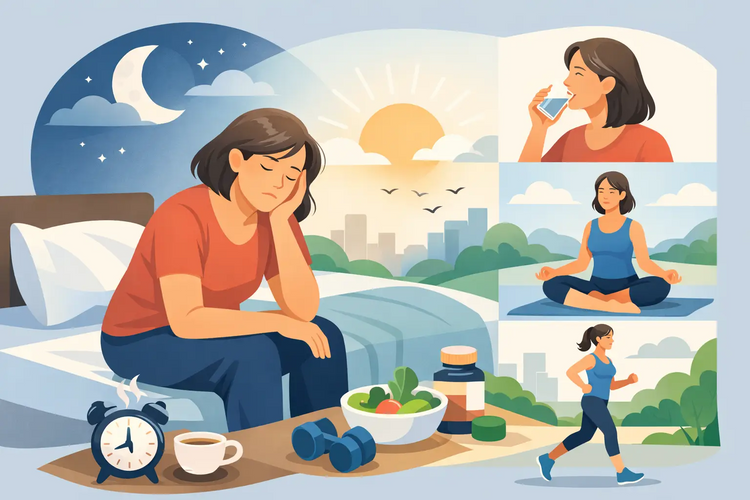
Perimenopause Fatigue Daily Routine That Helps
Apr 17th 2026
If you keep waking up tired, pushing through the afternoon in a fog, and wondering why your usual habits are no longer enough, perimenopause fatigue daily routine support can make a real difference. It’s not in your head, and it’s not a sign that you’re lazy or doing life wrong. Hormonal shifts can change how you sleep, recover, handle stress, and use energy across the day.
The frustrating part is that fatigue in perimenopause rarely responds well to extreme fixes. More caffeine, harder workouts, skipping meals, or trying to power through usually backfire. What helps most is a rhythm your body can trust - one that supports hormones without asking you to become a different person overnight.
If you’ve been dismissed, misdiagnosed, or left piecing symptoms together on your own, start there. Eco Your Way’s symptom quiz can help you put words to what you’re experiencing and point you toward the most relevant support. Sometimes the first step is simply realizing your exhaustion fits a pattern.
Why perimenopause fatigue feels different
Perimenopause fatigue is not always just about sleeping fewer hours. Estrogen and progesterone shifts can affect sleep quality, mood, blood sugar stability, body temperature, and stress response. That means you might technically be in bed long enough and still wake up drained.
Some women notice the problem starts with night sweats or insomnia. Others feel more flattened by stress, need longer to recover after exercise, or crash hard if they go too long without eating. For many, it’s a mix. That’s why a useful routine does more than target one symptom. It supports your whole daily energy pattern.
This is where a structured but gentle approach matters. A routine built around nutrition, exercise, rest, and stress management gives your body multiple chances to feel safer and steadier. You do not need perfection. You need consistency that is realistic enough to repeat.
A perimenopause fatigue daily routine that supports energy
The best routine is one you can actually live with. If your mornings are chaotic, your workdays are full, or your evenings revolve around caregiving, your plan needs to fit your real life. The goal is not to optimize every minute. It is to reduce the daily habits that drain you and strengthen the ones that help your body recover.
Morning: steady your system early
Start with light, hydration, and food before your day starts running you. Getting daylight into your eyes within the first hour of waking can help support your circadian rhythm, which matters when sleep has become irregular. It does not need to be a long walk. Even a few minutes outside or near bright natural light can help cue your body that the day has begun.
Drink water early, especially if you wake up dehydrated, overheated, or headachy. Then eat a real breakfast with protein, fiber, and enough substance to carry you. This is not the season for coffee as breakfast. If your blood sugar swings more easily now, a protein-light breakfast can set up a midmorning crash that feels like hormonal fatigue but is partly fueled by under-eating.
A simple example is eggs with fruit and toast, Greek yogurt with seeds and berries, or oatmeal paired with nuts or a side of protein. It does not have to be fancy. It does need to be stabilizing.
Midday: protect your energy, don’t spend it all at once
By midday, many women in perimenopause are already running on stress hormones. You may still be functioning, but your body is borrowing energy rather than producing it steadily. This is where routine matters most.
Eat lunch before you are starving. Include protein, color, and carbohydrates rather than trying to be overly restrictive. A salad with almost nothing in it may sound healthy, but it often leaves you exhausted, irritable, and reaching for sugar later. Your body needs enough fuel to keep blood sugar and cortisol from swinging wildly.
Movement helps here too, but intensity matters. If you are already depleted, a short walk, mobility work, or a brief strength session may support energy better than an all-out workout. Exercise can absolutely help perimenopause symptoms, but there is a trade-off. Too little movement can worsen sluggishness, while too much intensity without recovery can deepen fatigue. Your body will usually tell you which side you are on.
Build in one small reset during the day, especially if your nervous system feels constantly switched on. Five slow breaths, ten minutes away from your screen, or a short walk after lunch may sound minor, but small regulation moments lower the energy cost of stress.
Using NERS to make the routine sustainable
A perimenopause fatigue daily routine works best when it is anchored in a simple framework. That is why NERS - Nutrition, Exercise, Rest, and Stress Management - is so practical. It helps you stop chasing random tips and start building repeatable support.
Nutrition
Focus on regular meals, enough protein, fiber-rich carbohydrates, and meals that do not leave you feeling shaky an hour later. If fatigue hits hardest in the afternoon, look at what happened earlier. Skipped breakfast, too much caffeine, not enough water, or a low-protein lunch often show up there.
Nutrition does not need to become a moral test. You are not failing because your body needs steadier meals now. You are responding to changing physiology with more care.
Exercise
Think supportive movement, not punishment. Strength training, walking, stretching, and moderate cardio can all help, but the right mix depends on your current energy, sleep quality, and recovery. If you feel better after movement, that is useful information. If every workout leaves you wiped out for the rest of the day, your plan may need to be gentler for now.
Rest
Rest is not only sleep, though sleep matters. It also includes how much recovery you allow between demands. Evening overstimulation, late caffeine, inconsistent bedtimes, and trying to squeeze productivity out of every last drop of energy can keep your body from settling.
Create a wind-down that feels doable. Dim lights, reduce scrolling, eat dinner early enough that your body is not still working hard at bedtime, and keep your sleep environment as cool and calm as possible. If sleep is disrupted by hormonal symptoms, rest during the day in small ways still counts.
Stress management
Perimenopause often reduces your margin for stress. Things you once handled without much effort may now feel physically draining. That is not weakness. It is feedback.
Stress management in this season may look less like adding another task and more like reducing load where you can. That might mean saying no more often, simplifying decisions, asking for help, or stopping the cycle of pushing hard on good days and crashing on bad ones. A steady routine becomes easier when your life is not fighting it at every turn.
What to do in the afternoon and evening
The afternoon is where many women lose the day. If you tend to crash at 2 or 3 p.m., do not wait until you are desperate. Eat a snack with protein and fiber before the crash fully hits. Apple slices with nut butter, cottage cheese, or a handful of nuts with fruit can work well. The goal is to bridge your energy, not trigger another spike and drop.
If you rely on late caffeine, notice the trade-off. It may help you finish the workday, but it can also worsen the sleep problems that feed tomorrow’s fatigue. Sometimes reducing afternoon caffeine is one of the hardest but most effective changes.
In the evening, keep things simpler than you think you need to. A balanced dinner, light movement if it helps you unwind, and a clear signal that the day is ending can make a meaningful difference over time. Many women do better when they stop treating nighttime like catch-up time.
When your routine needs more support
If you are doing many of the right things and still feel flattened, pay attention. Fatigue can overlap with thyroid issues, iron deficiency, blood sugar problems, sleep apnea, burnout, or other hormonal imbalances. Perimenopause may be part of the picture without being the whole picture.
That is one reason tools that help you track patterns can be so valuable. When you can see how your energy connects to sleep, meals, stress, and symptoms, it becomes easier to respond with intention instead of guessing. And if you want support beyond information, the NERS Skool community is where women actually practice these habits together. Not just learning, but doing it with structure, accountability, and support that helps routines stick.
You do not need a perfect morning, a perfect diet, or a perfect hormone story to start feeling better. Begin with the next doable shift: a steadier breakfast, a gentler workout, an earlier wind-down, a few minutes of daylight, one less thing on your plate. When fatigue has been running the show, small repeatable care is often what helps you take your energy back.